
The RTA has completed more than 1,050 transportation projects since 2006. Voters approved a new $2.67 billion plan on March 10, 2026. The RTA is now working to finish remaining 2006 projects and start projects from the new plan.
Overview
The project information below covers the 2006 RTA plan. The RTA is now also implementing a new 20-year, $2.67 billion plan approved by voters on March 10, 2026.
The new plan will be carried out in four five-year stages over a 20-year period. The RTA is working with local governments to start and complete projects as quickly as possible.
Plan Elements
Roadway (Multimodal) Corridor
This includes 31 new road projects and seven carried over from the 2006 plan. Five are highway interchange projects. Links to project websites will be added as projects begin.
Safety, ADA and Active Transportation
This includes bike lanes, sidewalks, crosswalks, and traffic signal upgrades across Pima County. Safety improvements are also built into other RTA projects.
Arterial and Collector Roads, Pavement Rehabilitation
These projects rebuild roads from curb to curb. Note that filling potholes is handled by local governments, not the RTA.
Environmental
This element funds wildlife crossings — tunnels, fencing, or other solutions — to keep animals and drivers safe where animals often cross busy roads.
Transit
This funding supports buses (including evening and weekend service), Sun Shuttle neighborhood rides, paratransit, the Sun Link streetcar, and new safety improvements on the regional transit system.
Watch for additional changes coming soon to the RTA website.
2006-2026 RTA Plan Projects
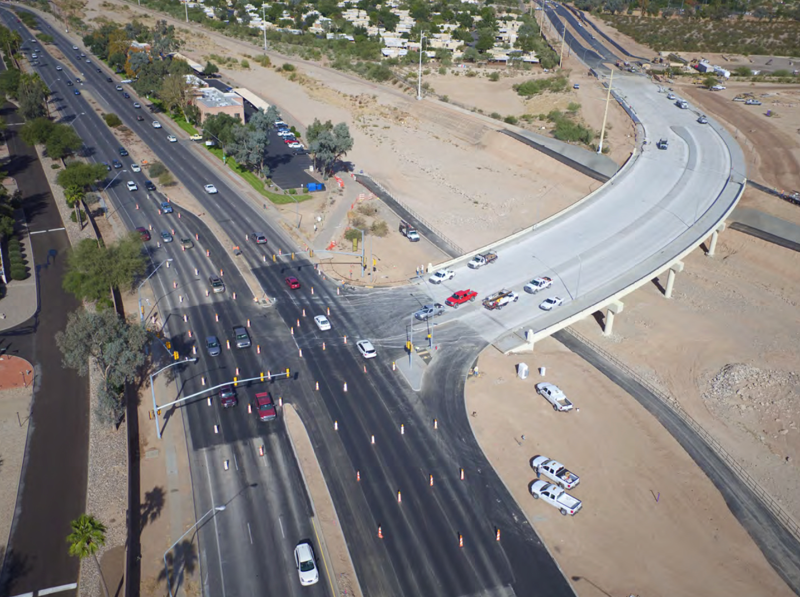
5 specific roadway projects identified in the RTA’s 20-year plan include new roads and bridges, intersection reconstruction, roadway improvements and Interstate 10 traffic interchange projects. The corridors are designed to help you get to where you need to go, whether you drive, use transit, walk or bike. Many corridor projects include bike lanes, multi-use paths and sidewalks to help integrate all modes of transportation within the regional network.
Bike/Pedestrian – Bicycle and pedestrian improvements provide additional travel choices in the regional transportation network and enhance safety for all users. Here are a few improvement highlights, through March 2026:
- New signalized pedestrian crossings have been constructed throughout the region. To date, 84 crossings have been completed.
- Of 250 miles of sidewalks planned, 183 miles have been completed so far.
- More than 370 miles of bikes lanes have been constructed.
- A popular improvement among cyclists and pedestrians is the El Paso and Southwestern Greenway that connects the Cities of Tucson and South Tucson.
- An innovative RTA project is located along The Chuck Huckelberry Loop system: a bike/pedestrian bridge over Camino de la Tierra which is made from recycled girders.
Safety – When voters approved the RTA plan in 2006, safety for all system users was a priority in the region and remains so today. Safety is built into every project, including intersection, bridge and railroad crossing improvements, along with bus pullouts and signal technology upgrades. Of more than 200 bus pullouts planned, 180 have been completed through March 2026 along transit routes. Also, more than 200 intersections have been built across the greater Tucson region. Improvements address the needs of all commuters, including the elderly, students and people with disabilities.
Wildlife – Transportation-related wildlife linkages funded by the RTA help to protect both the motorists and wildlife across the region. These safety enhancements provide connectivity for a wide variety of desert wildlife including coyotes, mule deer, bighorn sheep, mountain lions, javelina, desert tortoise and snakes. A wildlife crossing can be a roadway overpass, underpass or drainage structure to allow animals to safely traverse the man-made barriers. Freestanding wildlife linkages and crossings are integrated with the roadway design of RTA improvement projects. These connections not only help prevent crashes that are dangerous to people and animals, they also allow wildlife to access their natural habitats safely.